
The Gut–Brain Connection and Anxiety: What Science Really Says
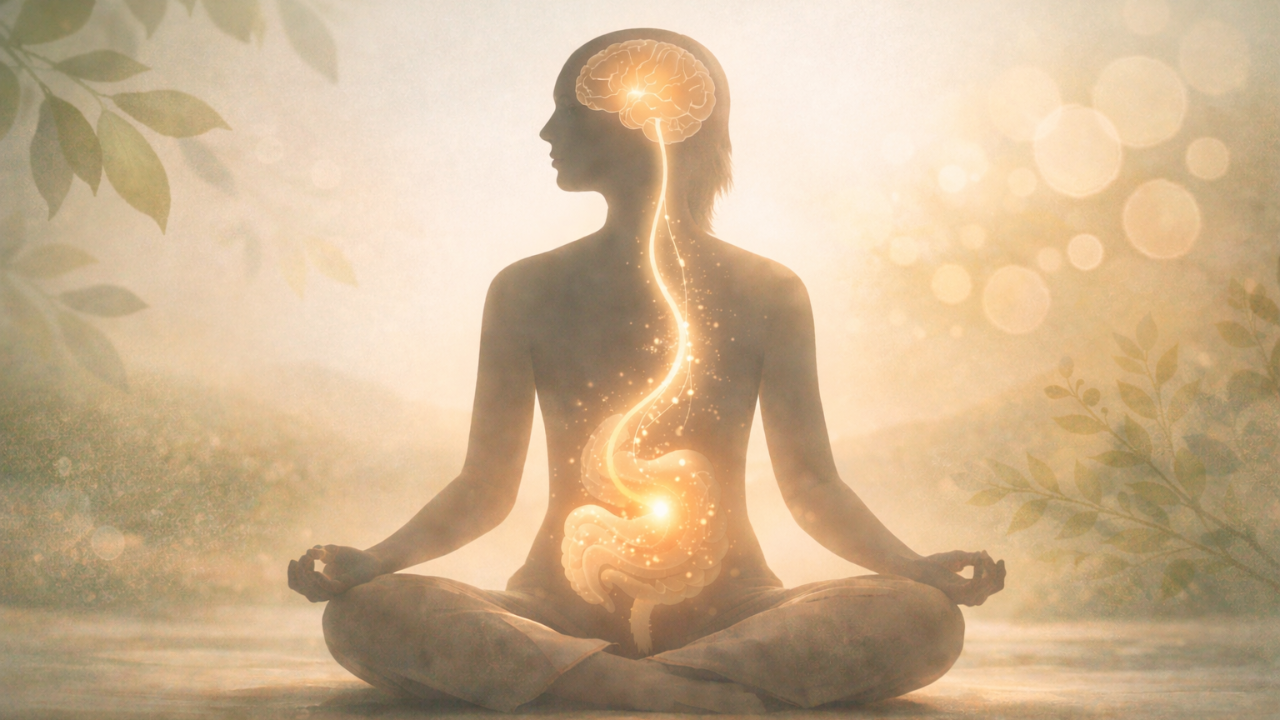
Anxiety has become one of the most common challenges people face today. Many people feel overwhelmed, restless, or constantly on edge, even when nothing seems obviously wrong.
In recent years, a new idea has gained a lot of attention: that anxiety might be connected to the health of our gut. Social media often simplifies this by saying things like “anxiety is caused by gut bacteria” or “fix your microbiome and your anxiety disappears.”
There is some truth behind the gut–brain connection, but the full picture is more nuanced and much more interesting. Science is beginning to reveal something that many ancient traditions already understood: the body is not a collection of separate parts. The brain, gut, immune system, and nervous system are constantly communicating with each other.
This relationship is known as the gut–brain axis, and it plays an important role in how we experience stress, mood, and emotional balance.
Understanding this connection can help us approach anxiety with more compassion, awareness, and balance.
What Is the Gut–Brain Axis?
The gut–brain axis is the communication network between the digestive system and the brain.
Rather than operating independently, these two systems are in constant conversation. Messages travel back and forth through several pathways, including:
- The vagus nerve, which directly connects the gut and brain
- Hormonal signaling throughout the body
- Immune system responses
- Activity from the gut microbiome, the trillions of microbes living in our digestive system
Because of this constant communication, what happens in the gut can influence how the brain responds to stress, and what happens in the brain can affect digestion.
This is why many people notice that when they feel anxious, they may also experience digestive discomfort, stomach tightness, or changes in appetite. The connection between these systems is real and deeply integrated.
The Serotonin Misunderstanding
One of the most common statements you may hear online is that “90 percent of serotonin is made in the gut.” This statement is technically true, but it is often misunderstood.
About 90–95% of serotonin in the body is produced in the gastrointestinal tract, where it helps regulate digestion, intestinal movement, and communication within the gut. However, this serotonin does not cross the blood–brain barrier to directly determine mood in the brain.
In other words, gut serotonin primarily supports digestive function rather than directly controlling emotional states. That said, the gut can still influence mood indirectly through several other fascinating biological pathways.
How the Microbiome May Influence Anxiety
The microbiome refers to the diverse community of bacteria, fungi, and microorganisms living in the digestive tract. These microbes play important roles in digestion, metabolism, immune function, and potentially emotional regulation. Researchers believe the microbiome may influence anxiety through several mechanisms.
Vagus Nerve Signaling
The vagus nerve acts like a communication highway between the gut and the brain. Signals from the digestive system can travel along this nerve and influence how the brain processes stress and emotional responses. When the nervous system is calm and balanced, this communication tends to support relaxation and stability.
Immune and Inflammatory Pathways
The gut is closely linked to the immune system. When the digestive environment becomes imbalanced, it can contribute to inflammation in the body.
Research has increasingly shown that inflammation may play a role in mood disorders and anxiety. When the immune system is activated for long periods of time, it can influence brain chemistry and stress responses.
Neuroactive Compounds
Certain gut bacteria produce substances that interact with the nervous system, including compounds related to neurotransmitters.
For example, some microbes can influence the production or regulation of substances like:
-
GABA, which helps calm the nervous system
-
Short-chain fatty acids that influence brain signaling
-
Other neuroactive compounds that affect stress pathways
These interactions are still being studied, but they suggest the gut environment may subtly influence how the brain experiences stress and emotional balance.
What Research on Probiotics Shows
Because of this connection, researchers have explored whether probiotics might influence anxiety. Some randomized studies involving specific bacterial strains, including Lactobacillus rhamnosus and Bifidobacterium longum, have shown modest improvements in stress and anxiety markers in certain groups.
However, it is important to understand that these effects are generally moderate rather than dramatic.
Probiotics and fermented foods may support overall health, but they are not a universal solution for anxiety. Fermented foods are not a replacement for therapy. Probiotics are not a substitute for psychiatric treatment when needed. And anxiety is rarely caused by a single factor.
Anxiety Is More Complex Than One Cause
One of the most important things to understand about anxiety is that it is multifactorial. Mental health emerges from a combination of influences, including:
-
Brain chemistry and neurobiology
-
Life experiences and environment
-
Thought patterns and perception
-
Sleep quality
-
Nutrition and metabolism
-
Inflammation in the body
-
Social support and stress levels
Reducing anxiety to a single cause, whether gut bacteria or anything else, oversimplifies a deeply interconnected system. The human body works best when we approach it with integration rather than reductionism.
Supporting Both the Gut and the Nervous System
Instead of searching for one solution, a balanced approach often supports both physical and emotional wellbeing. Some gentle ways to support this connection include:
Nourishing the Gut
Eating a varied diet rich in fiber, vegetables, whole foods, and natural sources of beneficial bacteria can help support microbial diversity.
Hydration and mineral balance also play important roles in overall digestive health.
Calming the Nervous System. Practices that help regulate the nervous system can reduce stress signals traveling between the brain and gut.
These may include:
-
Meditation
-
Breathwork
-
Time in nature
-
Restorative sleep
-
Gentle movement
These practices help bring the body back into a state of balance where healing can occur more naturally.
The Reset Perspective
In my work, I often speak about the importance of a reset. When we experience anxiety, the nervous system can become stuck in a cycle of heightened alertness. The body begins to interpret even small challenges as threats.
Resetting the system does not happen by forcing the mind to be calm. It happens by creating conditions where the body feels safe again.
When the body settles, the mind often follows.
This is why practices that regulate breathing, slow the heart rate, and bring awareness back to the present moment can be so powerful.
They help restore harmony between the brain, body, and gut.
Collective Calm and the Peace Meditation
Another powerful way to support the nervous system is through group meditation and shared intention. Each Thursday, during the Peace Meditation, we come together with a simple intention: to create peace coherence within ourselves and extend that coherence outward into the world.
This practice reflects what researchers sometimes refer to as the Maharishi Effect, the idea that collective meditation can influence the emotional atmosphere of a community. When many people calm their nervous systems simultaneously, a ripple of stability and peace can spread beyond the individual.
In many ways, this mirrors the same principle we see in the gut–brain axis: everything is connected. Our inner state influences the larger field around us.
The gut–brain axis reminds us that the body is an intelligent and interconnected system. The brain, the gut, the nervous system, and our emotional lives are not separate. They are constantly communicating, responding, and adapting.
While gut health may influence anxiety, it is only one part of a much larger picture. Real healing rarely comes from one quick fix. It comes from integration, awareness, and gentle care for the whole system.
When we support the body, calm the nervous system, nourish the gut, and cultivate moments of stillness, we begin to restore the natural balance that already exists within us.
And sometimes, the most powerful reset begins with something simple: a quiet breath, a moment of presence, and remembering that the body knows how to return to harmony.
Verified Sources
The information in this article is informed by peer-reviewed research on the gut–brain axis, microbiome science, and stress physiology.
Cryan, J. F., & Dinan, T. G. (2012).
Mind-altering microorganisms: The impact of the gut microbiota on brain and behaviour.
Nature Reviews Neuroscience.
This landmark paper explores how gut microbes influence brain function, behavior, and emotional health through the gut–brain axis.
Foster, J. A., Rinaman, L., & Cryan, J. F. (2017).
Stress and the gut–brain axis: Regulation by the microbiome.
Trends in Neurosciences.
This research explains how the microbiome interacts with stress pathways, the nervous system, and immune signaling.
Bravo, J. A., et al. (2011).
Ingestion of Lactobacillus rhamnosus regulates emotional behavior and central GABA receptor expression in a mouse model via the vagus nerve.
Proceedings of the National Academy of Sciences (PNAS).
This study demonstrated how specific probiotic strains may influence anxiety-related behaviors through vagus nerve signaling.
Wallace, C. J. K., & Milev, R. (2017).
The effects of probiotics on depressive symptoms in humans: A systematic review.
Annals of General Psychiatry.
A review of clinical research evaluating whether probiotics may influence depression and anxiety symptoms.
Yano, J. M., et al. (2015).
Indigenous bacteria from the gut microbiota regulate host serotonin biosynthesis.
Cell.
This study examined how gut microbes influence serotonin production within the gastrointestinal tract.
This article is for educational purposes only and is not intended to replace professional medical advice, diagnosis, or treatment.
Stay connected with news and updates!
Join our mailing list to receive the latest news and updates from our team.
Don't worry, your information will not be shared.

Shirin - The Reset Queen
Author
Intuitive teacher and healer for over thirty years. She helps hundreds of people bring positive change into their lives by giving them the tools required to live their dreams, by teaching them to access and MASTER their intuition.
Recent Posts
