
The Intelligence of the Heart: What Science Is Discovering About Intuition, Emotion, and Inner Wisdom

Have you ever known something before you could explain it?
Perhaps you met someone and instantly felt comfortable in their presence.
Or maybe you walked away from an opportunity that looked perfect on paper but somehow didn't feel right.
Many of us have experienced moments like these. We often describe them as intuition, a gut feeling, or simply "knowing" without knowing why.
For centuries, people have spoken about listening to the heart.
Ancient wisdom traditions taught that the heart was more than a physical organ. It was seen as a center of wisdom, connection, and inner knowing.
Modern science is now uncovering fascinating insights that suggest the relationship between the heart and brain is far more complex than we once believed.
While the heart is certainly not replacing the brain, researchers have discovered that the heart plays a much larger role in our emotional and physiological experience than many people realize.
The more we learn, the more we are reminded that true well-being may come from bringing the heart and mind into harmony.
The Heart Does More Than Pump Blood
Most of us learned in school that the heart's primary role is to circulate blood throughout the body.
That is certainly true.
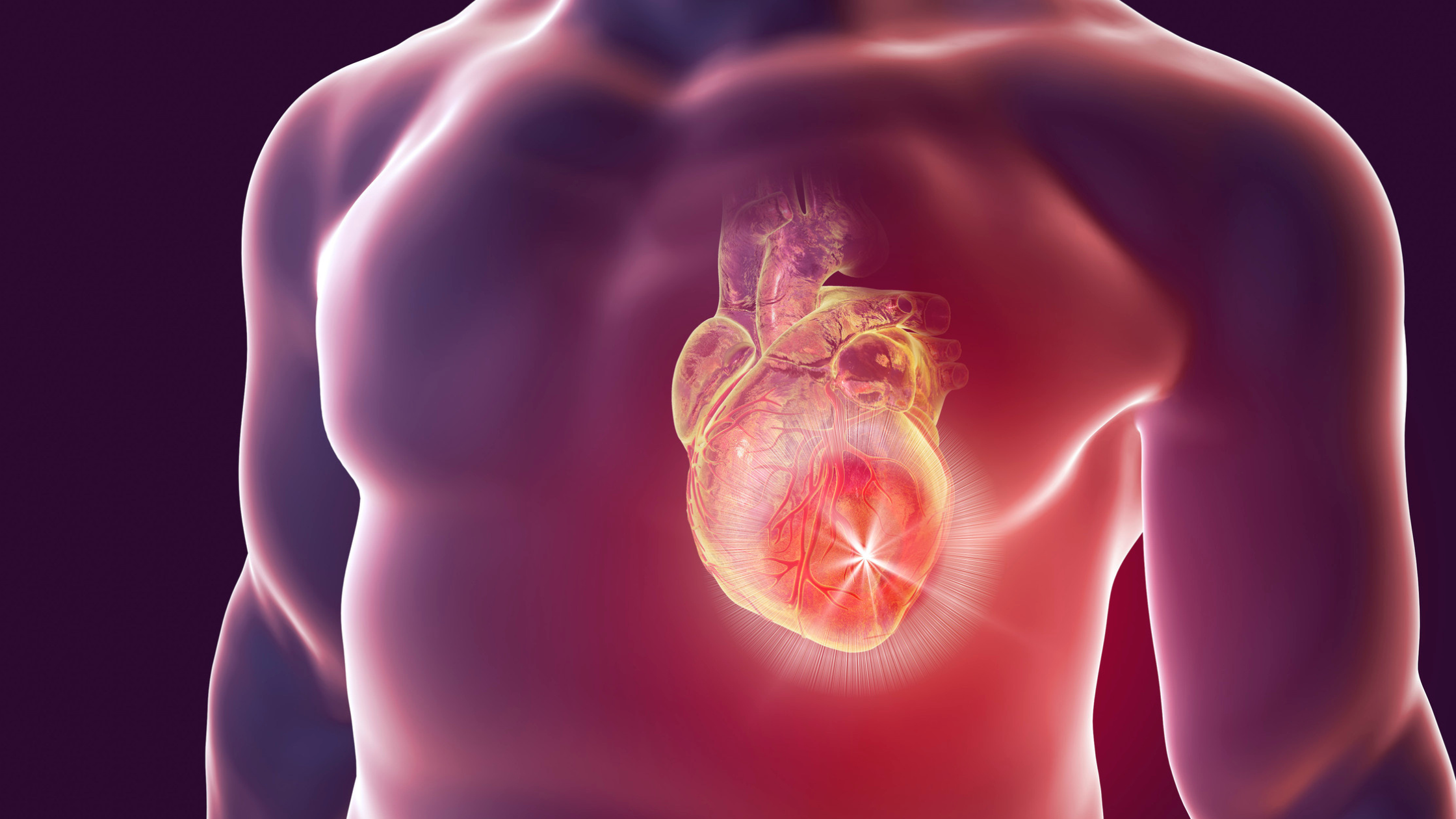
But researchers have also discovered that the heart has its own intrinsic nervous system, sometimes referred to as the "heart brain."
This network contains approximately 40,000 specialized neurons that allow the heart to communicate continuously with the brain and the rest of the body.
Communication between the heart and brain occurs through multiple pathways, including:
- The nervous system
- Hormonal signaling
- Biochemical communication
- Electromagnetic interactions
In fact, research suggests that the heart sends significant amounts of information to the brain, influencing emotional processing, attention, perception, and decision-making.
This doesn't mean the heart thinks the way the brain does.
Rather, it reminds us that the body functions as an integrated system in which information is always flowing in multiple directions.
Why We Feel What We Feel
One of the most fascinating aspects of the heart-brain connection is how closely it relates to our emotional state.
When we experience stress, frustration, fear, or anxiety, the rhythms of the heart become less coherent and more irregular.
The nervous system responds accordingly.
Breathing changes.
Hormones shift.
The body enters a protective state.
On the other hand, emotions such as gratitude, appreciation, compassion, and love tend to create more harmonious heart rhythms.
Researchers studying heart rate variability have observed that positive emotional states are associated with greater physiological coherence.
When the body is coherent, communication between various systems becomes more efficient.
We often experience this as clarity, calmness, and emotional balance.
This is one reason why our emotional state matters so much.
Our feelings are not separate from our biology.
They are influencing it continuously.
The Wisdom Behind Intuition
Many people have experienced moments when they sensed something before they could logically explain it.
A feeling that guided them toward a decision.
A knowing that encouraged them to trust their path.
An inner voice that whispered when everything else was noisy.
While science cannot fully explain intuition, researchers continue to study how the body processes information beyond conscious awareness.
Our brains are constantly gathering information from our environment.
Our nervous systems are continuously assessing safety, connection, and potential threats.
Sometimes what we call intuition may be the result of subtle information being processed beneath conscious awareness.
Whatever language we use, one thing is clear:
There is value in learning to listen.
Not only to our thoughts but also to the signals arising within our bodies.

Why Modern Life Pulls Us Out of the Heart
Modern culture often rewards speed, productivity, analysis, and constant mental activity.
We are taught to think more.
Do more.
Achieve more.
While the mind is a powerful tool, many people become disconnected from another important source of wisdom: their inner experience.
They stop listening to their feelings.
They ignore their body's signals.
They override their intuition.
Over time, this can create a sense of disconnection.
The mind becomes loud while the heart becomes difficult to hear.
Yet some of life's most important decisions cannot be made through logic alone.
Relationships.
Purpose.
Meaning.
Joy.
These experiences often require both intelligence and intuition.
Both thought and feeling.
Both mind and heart.
The Reset Perspective
In my work, I often speak about the importance of creating moments of reset.
A reset is not about rejecting the mind.
It is about creating enough stillness to hear the deeper wisdom beneath the noise.
When we are overwhelmed, stressed, or constantly distracted, the nervous system remains activated.
The body stays in a state of reaction.
It becomes difficult to hear our intuition because we are busy managing stimulation.
Through meditation, breathwork, self-awareness, and intentional pauses, we create space for clarity to emerge.
This is where heart and mind begin to work together rather than compete with one another.
The goal is not to choose one over the other.
The goal is harmony.
When the heart and mind align, we often feel more grounded, more peaceful, and more certain about the path ahead.
The Power of Heart-Centered Presence
One of the most beautiful discoveries in life is that who we are often matters more than what we say.
People may forget our words.
But they remember how they felt in our presence.
They remember whether they felt safe.
Seen.
Heard.
Valued.
The state we cultivate within ourselves influences the energy we bring into every interaction.
This is why inner work matters.
This is why healing matters.
This is why meditation matters.
As we create greater peace within ourselves, we naturally share that peace with others.
A Final Reflection
Perhaps the heart was never meant to replace the mind.
Perhaps its role is to remind us of what the mind sometimes forgets.
To slow down.
To feel.
To connect.
To trust.
To remember what truly matters.
The wisest life is not lived from the head alone.
Nor is it lived from emotion alone.
It emerges from the beautiful harmony between heart and mind.
And when we learn to listen to both, we often discover that the guidance we have been seeking has been within us all along.
If you feel called to deepen your connection with yourself, strengthen your intuition, and create greater inner peace, I would be honored to support you. Through private sessions, transformational programs, energy activations, and our weekly Peace Meditation gatherings, I help people reconnect with their inner wisdom and return to the balance that allows true healing to unfold.
The answers you seek may not be outside of you.
They may already be waiting within your own heart.
Sources and Research
The information in this article is informed by research on the heart-brain connection, neurocardiology, heart rate variability, and emotional coherence.
Institute of HeartMath — Research exploring heart-brain communication, heart rate variability, and physiological coherence.
Armour, J. A. (1991).
Neurocardiology: Anatomical and Functional Principles.
Research describing the heart's intrinsic nervous system and its communication with the brain.
McCraty, R., Atkinson, M., & Tomasino, D. (2001).
Science of the Heart.
Research examining the relationship between emotions, heart rhythms, and physiological coherence.
Thayer, J. F., & Lane, R. D. (2009).
Claude Bernard and the Heart-Brain Connection: Further Elaboration of a Model of Neurovisceral Integration.
Neuroscience & Biobehavioral Reviews.
Shaffer, F., McCraty, R., & Zerr, C. L. (2014).
A Healthy Heart Is Not a Metronome: An Integrative Review of the Heart's Anatomy and Heart Rate Variability.
Frontiers in Psychology.
Important Note
While the heart contains an intrinsic nervous system and communicates extensively with the brain, claims that the heart independently "thinks" or completely controls decision-making are not supported by current scientific evidence. This article explores the fascinating relationship between the heart, brain, emotions, and intuition while honoring both scientific research and personal experience.
Stay connected with news and updates!
Join our mailing list to receive the latest news and updates from our team.
Don't worry, your information will not be shared.

Shirin - The Reset Queen
Author
Intuitive teacher and healer for over thirty years. She helps hundreds of people bring positive change into their lives by giving them the tools required to live their dreams, by teaching them to access and MASTER their intuition.
Recent Posts
